
Overview
I led design as a senior product designer at ALTR, a data security SaaS platform that helps enterprises control who can see sensitive data inside tools like Snowflake and Databricks.
Ally Financial, a Fortune 500 financial services company came to ALTR needing a data protection solution that'd help scale their 400,000 existing Snowflake data policies so a non-technical team could manage and maintain it with ease. Each data point is tagged in their Snowflake environment but the problem was that their current workflow required a unique policy for each tag value. With 60,000 user roles and hundreds of thousands of tag combinations, Ally was looking at 400,000 individual policies, a highly unscalable set up. We discovered a solution that would enable policies to be set on the tag name level with multi-select options for tag values. This would reduce the number of needed policies drastically and was a solution that not only solved Ally's problem but made policy management much more scalable for all ALTR customers.
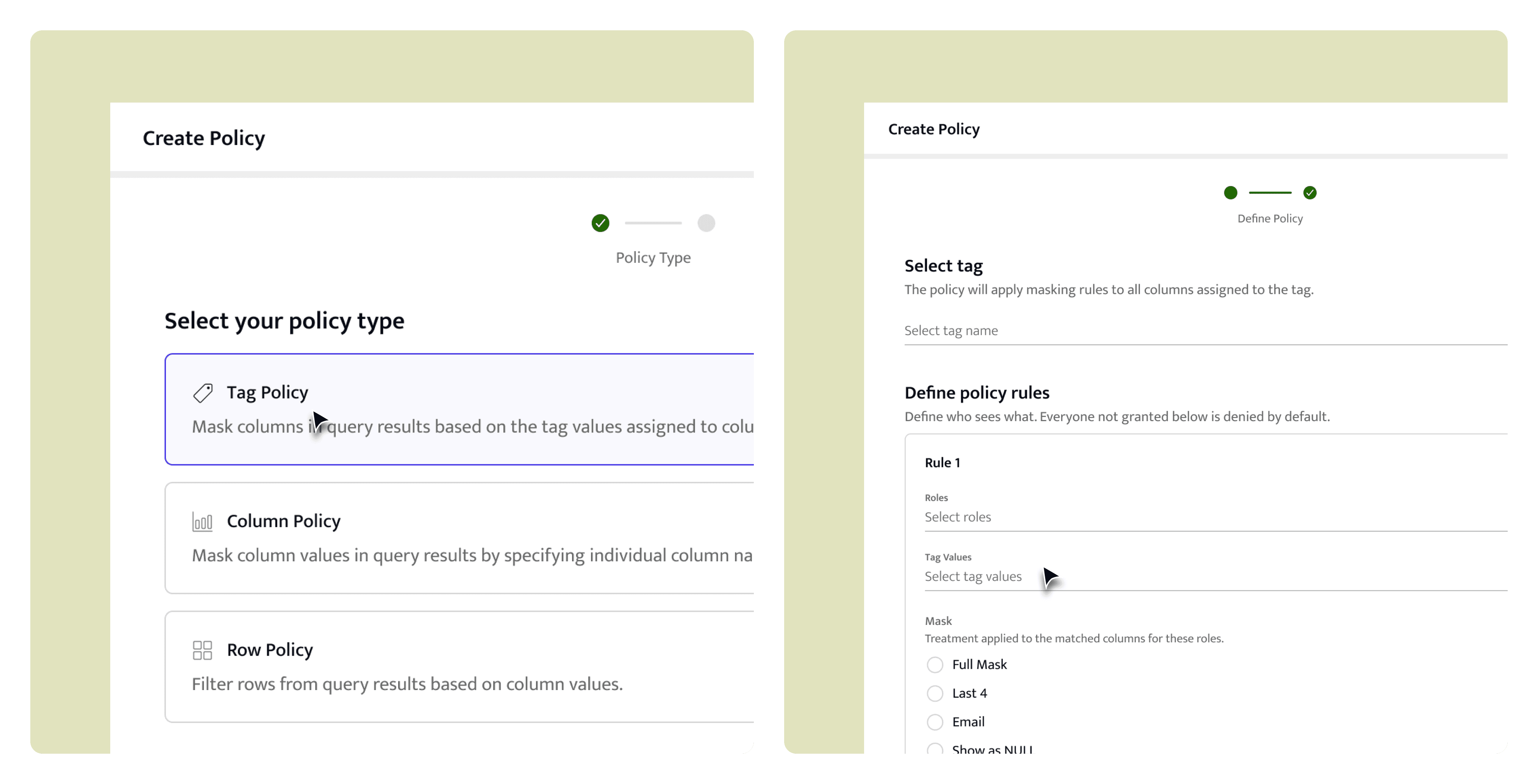
The Design Work
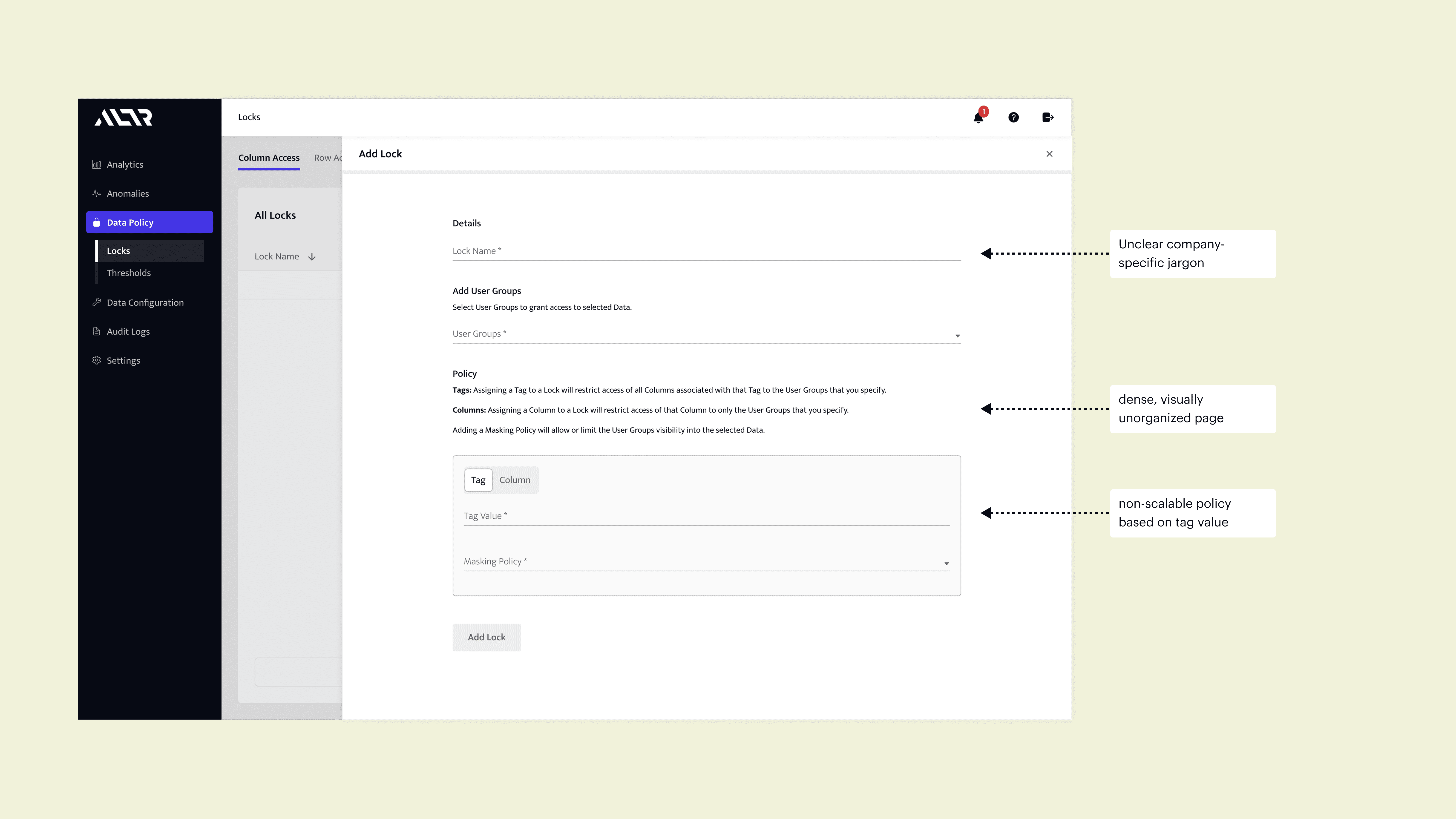
On top of enabling the new architectural change, I took this opportunity to also address some of the pain points with our existing UX. The original interface crammed everything into a single dense panel called "Add Lock," ALTR-specific terminology that meant nothing to a security analyst at a bank. All form fields lived on one screen with no clear sequence and the "Tag Value" field required users to know a specific value upfront, with no way to apply a rule across a whole category at once.
The Redesign
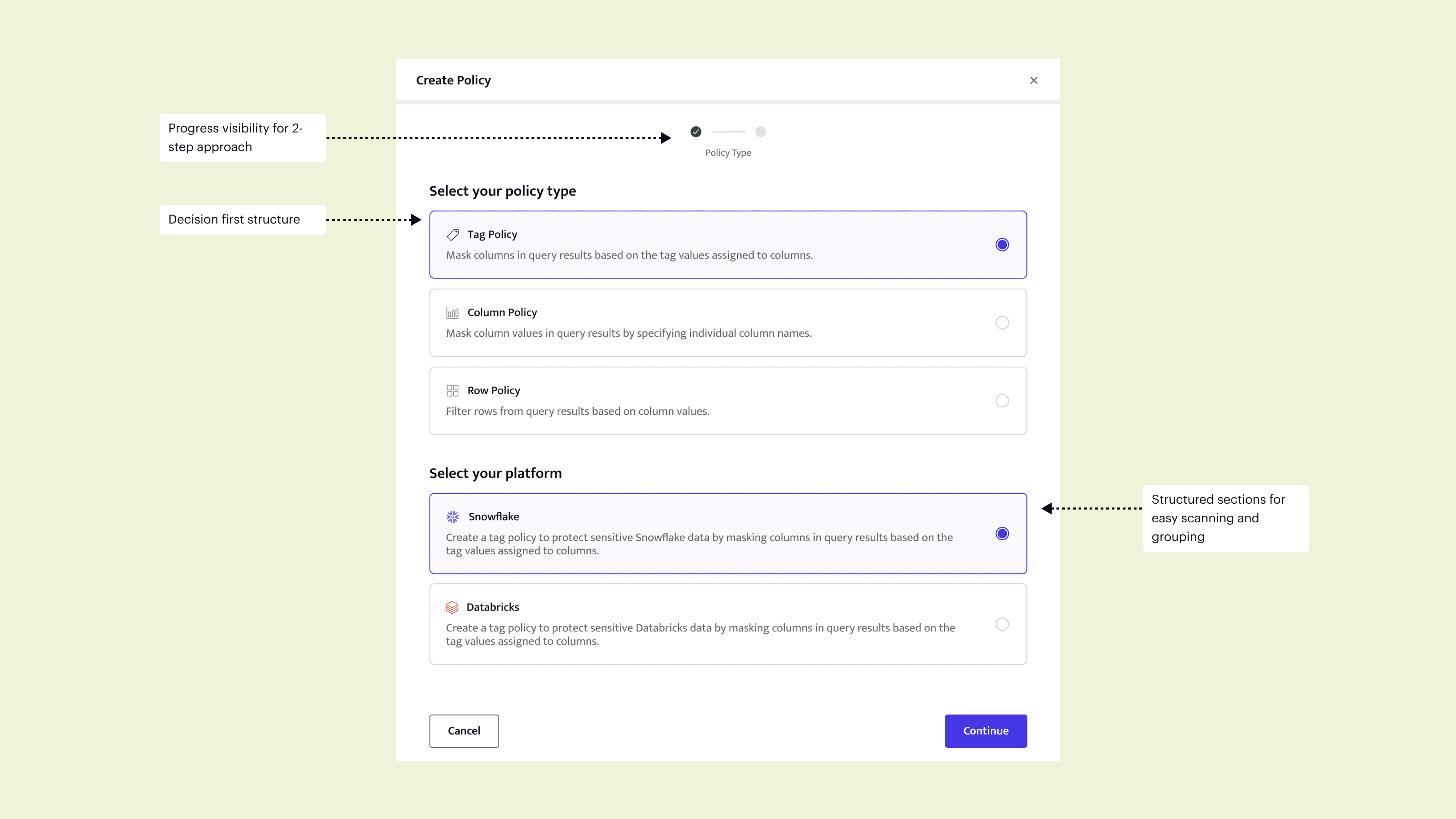
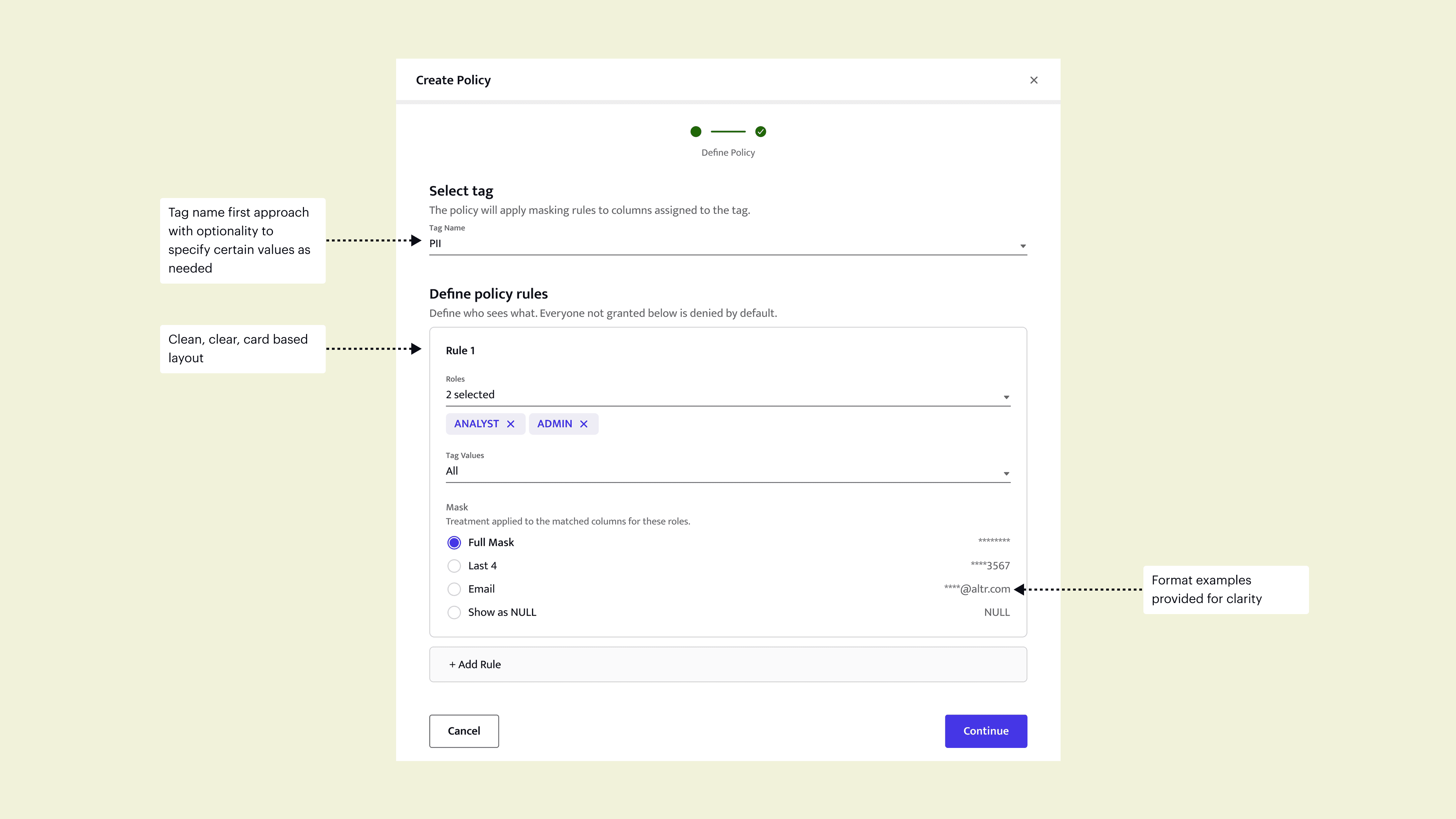
I replaced the single-page form with a clean two-step wizard. A progress indicator at the top signals that this is a completable task, providing helpful feedback to mentally anchor the user. The new flow leads with card-based options for policy and platform type. This presents decisions in a way that orients users and matches with their existing mental model for policy creation. Step 2 leads with tag name as the primary selection, anchoring the policy around a category rather than a specific value inside it. Drilling into specific values is available, but optional. Masking options are shown with live output previews alongside each choice. Users see the actual result before committing, replacing a bare dropdown with a decision they can make confidently.
Impact
Every decision in the redesign was made with all ALTR customers in mind:
- Replacing "Lock" with "Policy" removed friction that had existed since launch.
- The decision-first structure meant users oriented themselves before configuring anything.
- The name-first, value-optional tag model matched how non-technical users actually think about data protection.
The redesign reduced Ally's policy count from 400,000 to 300 and contributed to a contract expansion by 133%. Over the following year they migrated fully to the new system, roughly doubling the volume of protected queries running through ALTR.