Overview
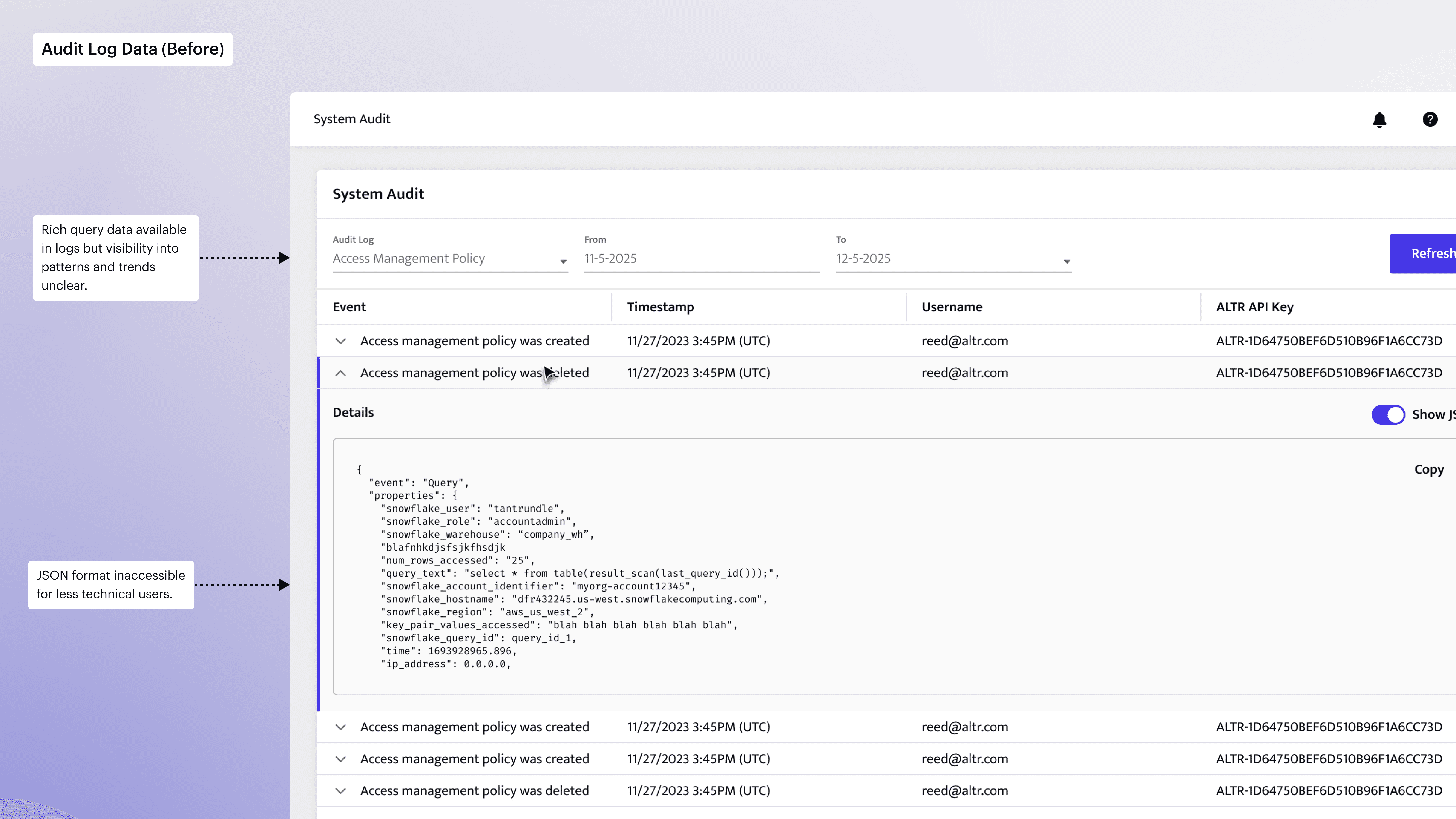
ALTR has rich log data but in it's raw state, visibility into trends and anomalies was difficult. With product management and engineering collaboration, I helped drive product direction to ship a solution that gave customers powerful insight to who was accessed what data, and when.
This MVP was built on existing data infrastructure, grew 4x in adoption within 3 months and became the second most-visited page in the product, establishing data observability as a core strategic pillar at ALTR.

Rich data with no visibility
JSON logs were being collected and stored in a table that users could reference. In their raw state, it was difficult for non-technical users to interpret and impossible to detect patterns and trends at scale. How might visibility empower technical and non-technical users to spot a problem? I saw this as a valuable opportunity and worked closely with PM and engineering to understand constraints and align expectations.
Research
I worked closely with the PM to conduct extensive market research on other data observability tools in our vertical as well as user and persona development for the technical and non-technical roles we were designing for.

What do we show?
It was crucial that each visualization on the dashboard answered real user questions. I led strategy exercises with PM and engineering to work through the stories we could tell with the existing event data we were already collecting. To help us, I created a decision pipeline that used simple yes/nos to help us narrow down our choices.

Design
With limited dev resources and a quick turnaround time we needed a full library of charts to use for our dashboard and fast. Our small and scrappy team had used MUI’s design library in the past as a resource for both design and development. Given the timeline of this project, I made the strategic decision to reference their data visualization components as a starting point.

A Key Design Decision
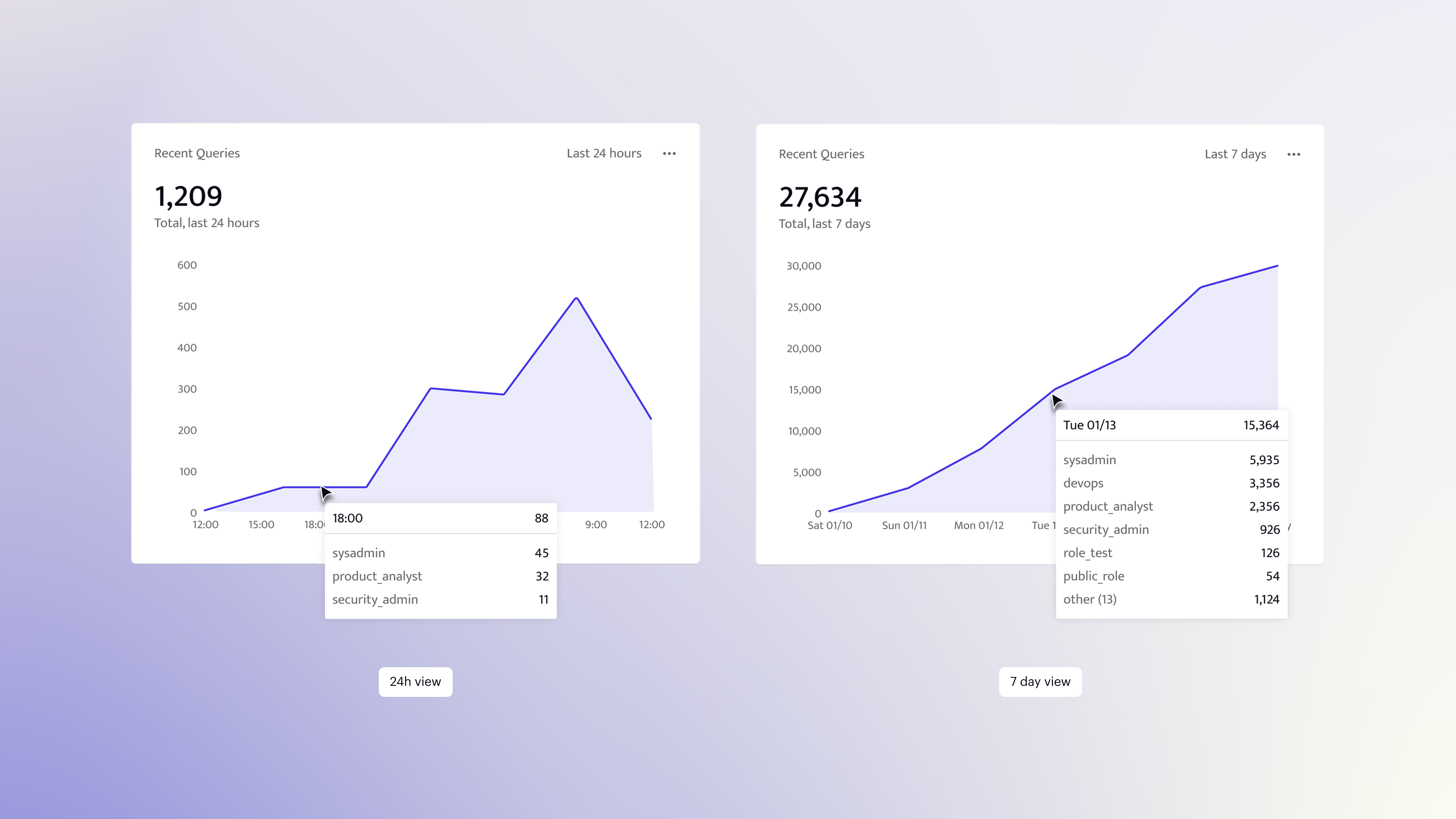
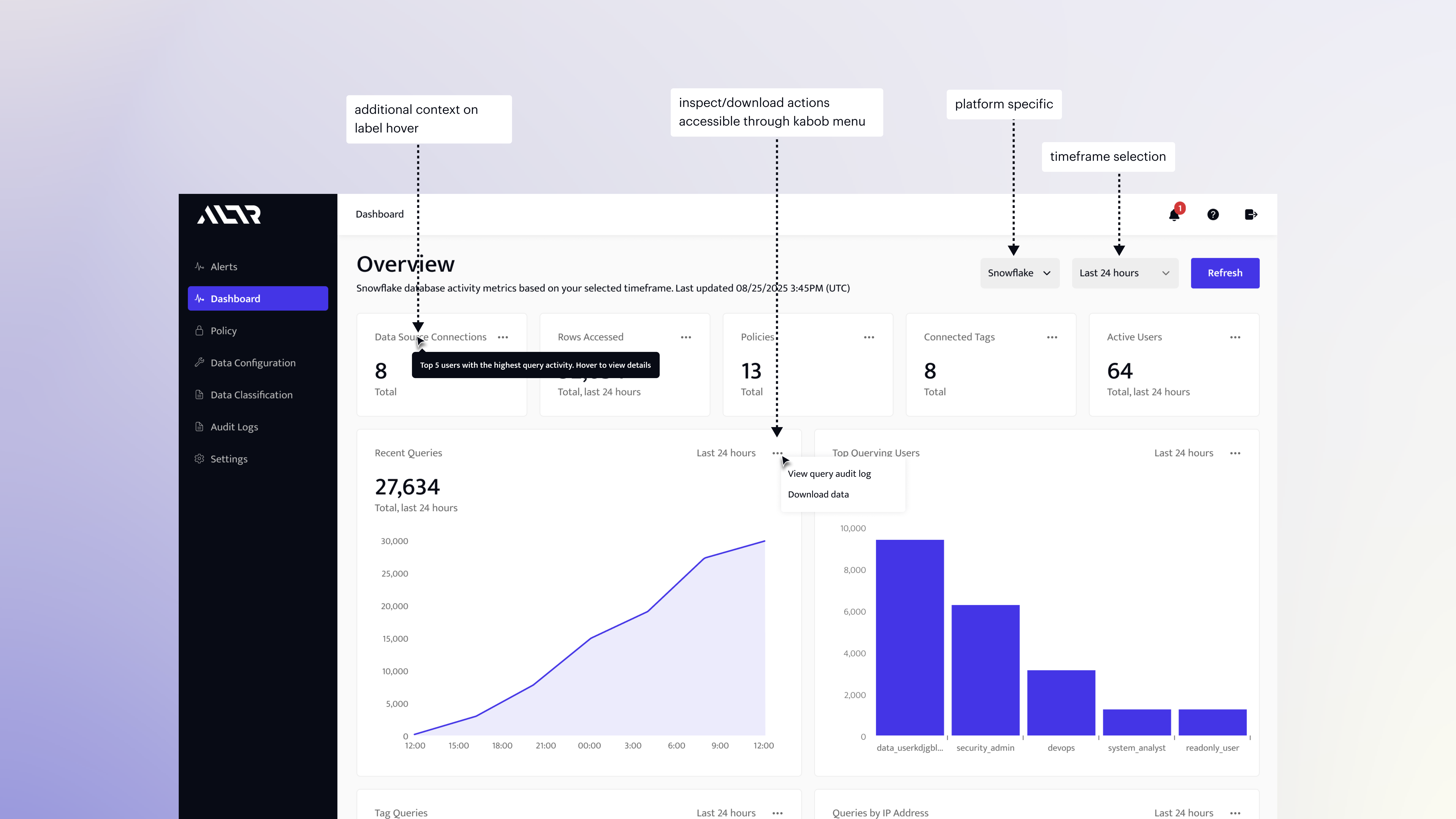
A central UX challenge was building for breadth and depth. Users needed a fast, scannable overview and the ability to investigate deeply without losing context. A key design decision was a "pages within widgets" pattern. Default visualizations showed trend data across a 7-day window, clicking into any data point opened a detail view with granular event-level information. This served two distinct audiences within one coherent interface: compliance and security stakeholders who needed a daily pulse, and data and engineering teams who needed depth for incident investigation.
Launch & Impact
Two weeks after launch I conducted three customer interviews to validate our approach. Customers were seeing value immediately, describing the dashboard as a bridge between technical and non-technical stakeholders. Dense log data now had a shape non-engineers could read and act on. The interviews also surfaced clear gaps. All three customers wanted a 24-hour view to compare daily activity across environments, and all three wanted clearer paths to act on the anomalies they were now able to see. That feedback drove two outcomes: a 24-hour view shipped within 30 days of those interviews, and a prioritized set of observability and alerting features that anchored our 2026 roadmap.
Reflection
Within 3 months of launch, the dashboard reached 65% of ALTR's active customer base and became the second most-visited page in the product. Customers were coming back regularly, building it into how they monitor their data environments day to day. Customers could now identify abnormal access patterns faster, demonstrate compliance with data access requirements, and make proactive security decisions. What started as an 8-week MVP became a strategic product pillar and the foundation for executive investment in expanding ALTR's observability capabilities through 2026.